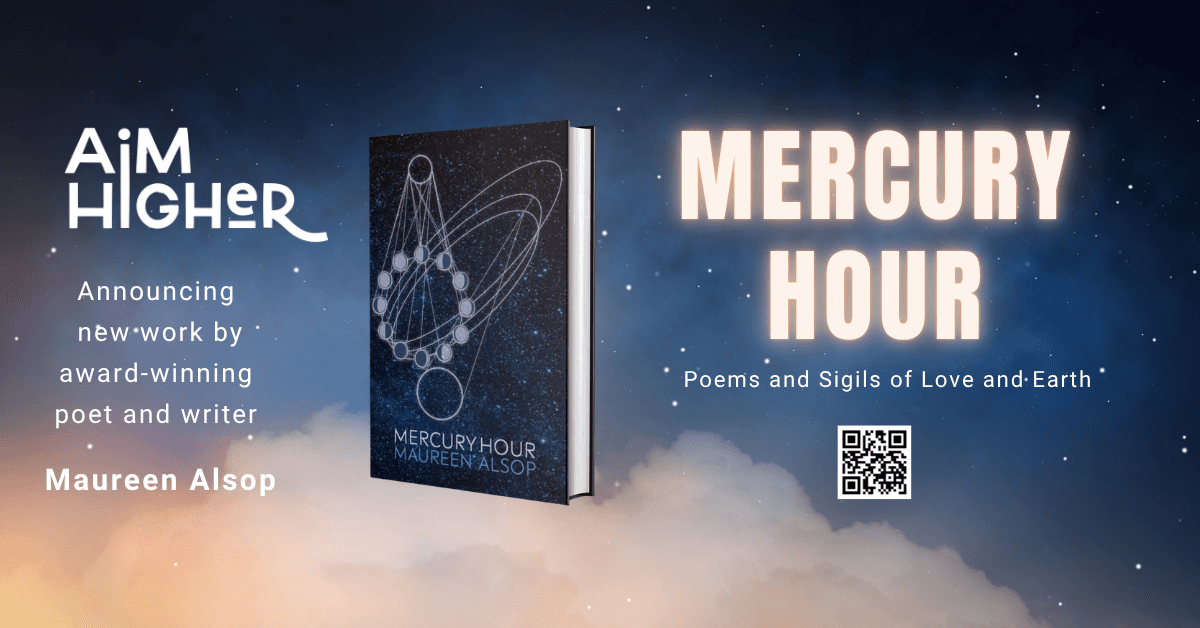
AIM Higher, Inc., a nonprofit publisher dedicated to elevating transformative voices, has released 'Mercury Hour,' a book-length poem by acclaimed poet and psychologist Maureen Alsop. The collection, published to coincide with National Poetry Month, draws inspiration from Juana de Ibarbourou's 'La Pasajera' and features the author's original hand-drawn sigils, including moon phases and astronomical diagrams that enhance its meditative quality. 'Mercury Hour' represents the sixth title from AIM Higher, Inc., advancing the organization's mission to amplify literary works that challenge, inspire, and heal.
The poem consists of beautifully distilled four-line stanzas that intertwine passion and grief for disappearing worlds, ultimately affirming poetry's capacity to restore what has vanished through dream, trance, and mystical vision. Poet Ruben Quesada observes that the collection presents a resilient spirit, asking whether loss can serve as 'a guiding light across time, space, and the fractured landscape of the heart.' Eartha Davis describes the poems as 'an internal rain rivering toward light, then more light, then even more,' noting they are 'filled by the silence that comes when there is internal singing.'
The visual elements, available through the publisher's website at https://www.aimhigherinc.org, deepen the atmospheric blend of dream and meditation while counterpointing themes of brokenness. Maureen Alsop, PhD, is the author of seven poetry collections, including the visual collection 'Tender to Empress' and experimental hybrid novel 'Today Yesterday After My Death.' Her work has appeared in numerous literary journals such as AGNI, The Kenyon Review, and South Dakota Review, with accolades including poetry prizes from Harpur Palate and Bitter Oleander and a recent Roderick Centre Fellowship.
'Mercury Hour' is now available through AIM Higher, Inc. and select independent booksellers, with further details accessible at https://www.aimhigherinc.org/mercury-hour. This release matters because it represents a significant contribution to contemporary poetry during National Poetry Month, showcasing how literary art can address profound themes of loss and restoration through innovative formal and visual approaches. The collection's publication by a nonprofit dedicated to transformative voices highlights the ongoing importance of independent literary publishing in nurturing works that might not find a home in commercial markets, while its integration of visual elements expands the possibilities of poetic expression and reader engagement.
The implications extend to both literary culture and psychological discourse, as Alsop's background as a psychologist informs the work's exploration of grief and healing through artistic means. By affirming poetry's capacity to restore what has vanished, the collection offers a counter-narrative to purely analytical approaches to loss, suggesting that mystical vision and dream states hold restorative power. This aligns with growing recognition across disciplines of art's therapeutic potential, while the timing during National Poetry Month amplifies public awareness of poetry's continued relevance as a medium for grappling with contemporary existential concerns.